
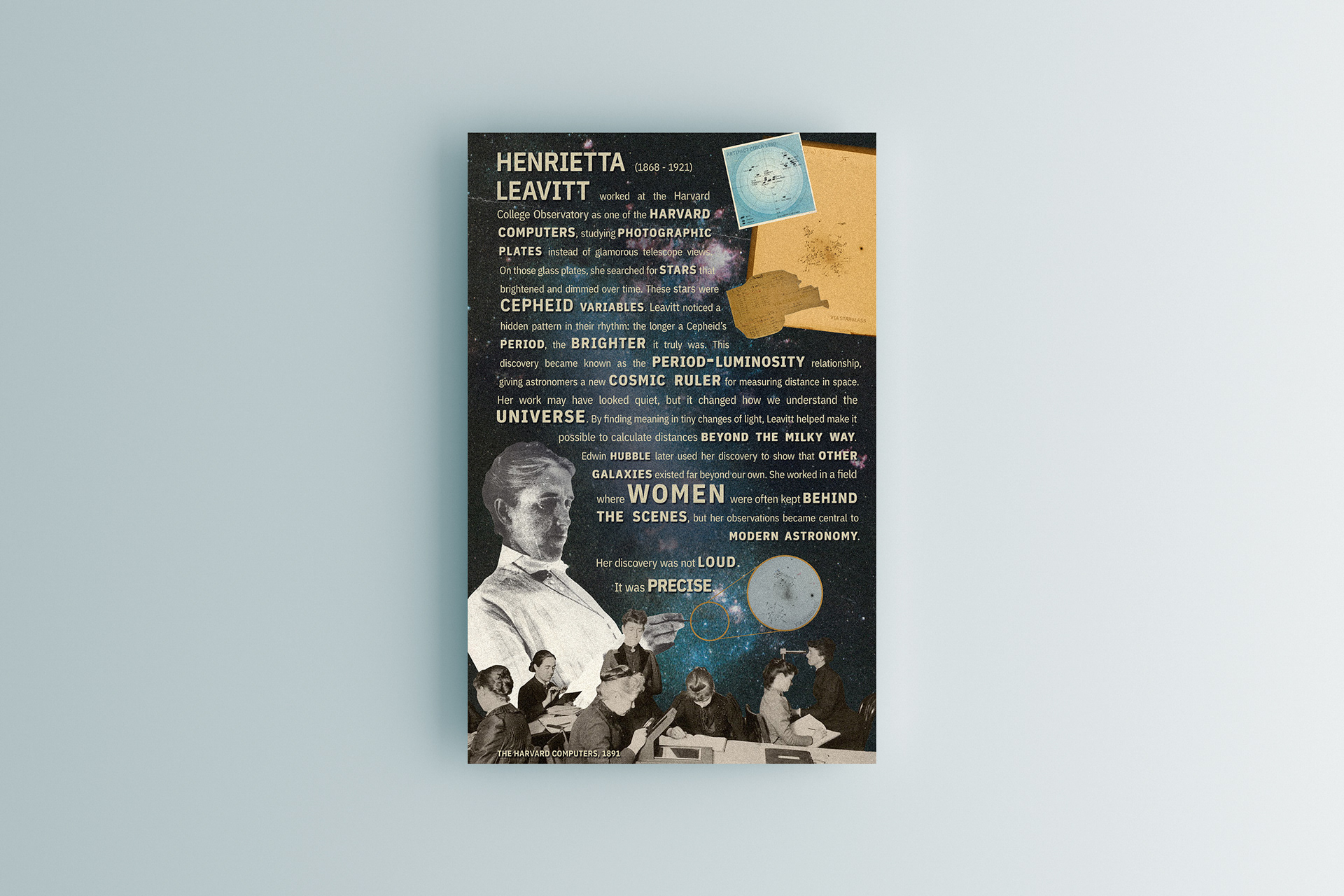
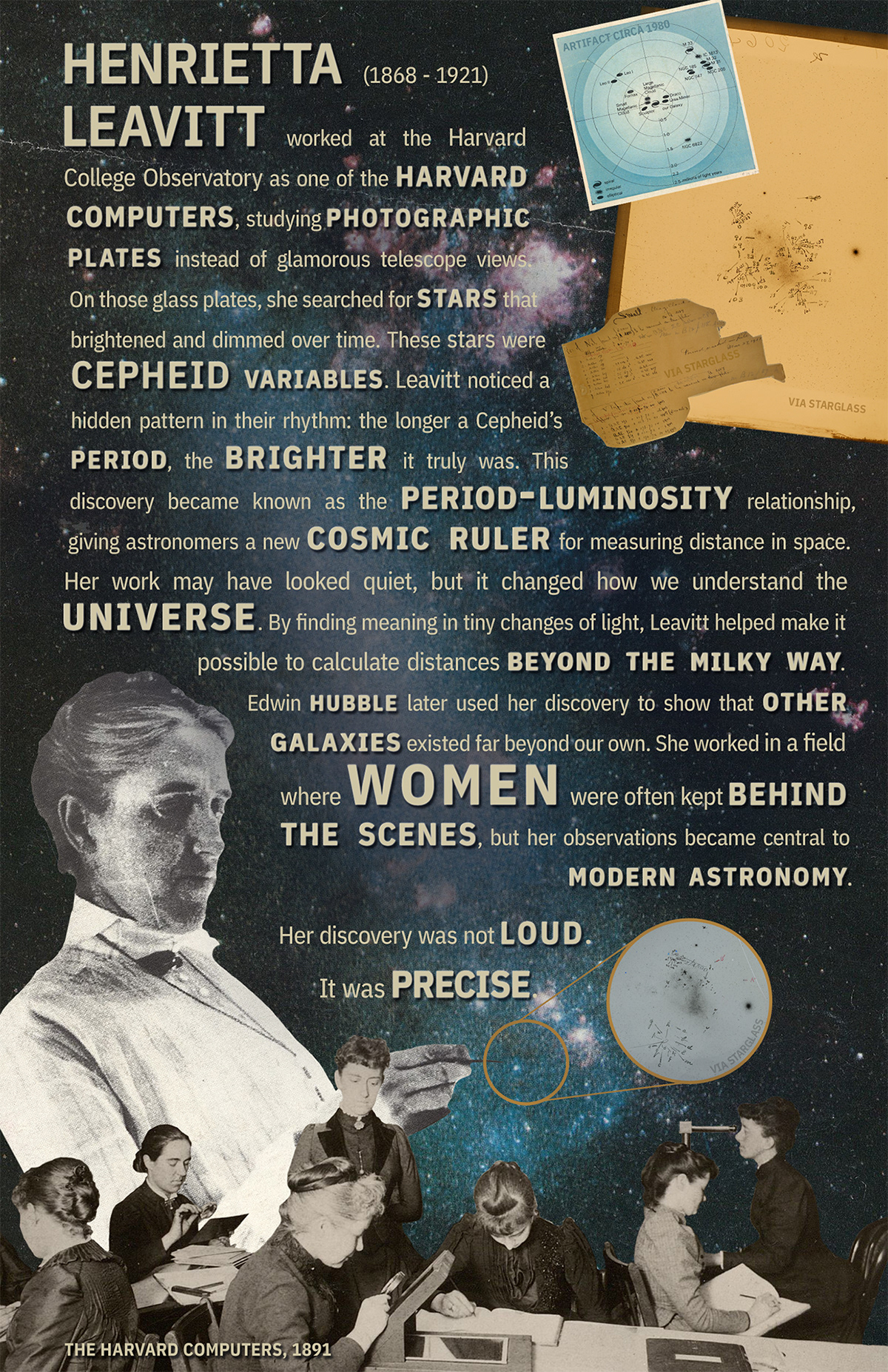
This visual essay was created for a college digital imaging honors course. It explores Henrietta Leavitt’s work with photographic plates and Cepheid variables, highlighting the discovery that helped astronomers measure distance in space. The design combines historical and astronomical imagery, and typography in contrast to reflect the connection between her detailed observations and her impact on modern astronomy.
Designed in Adobe Photoshop.
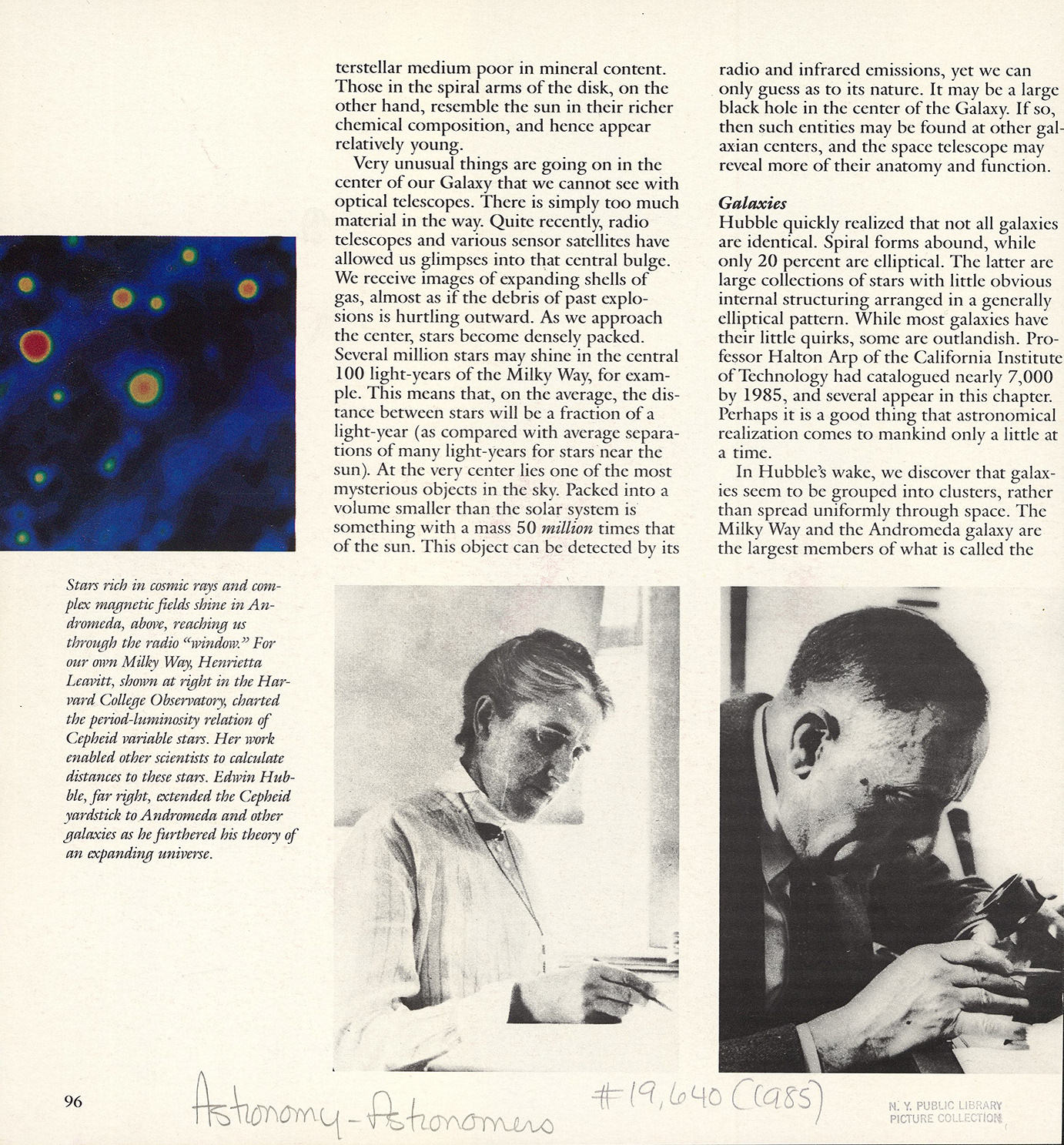
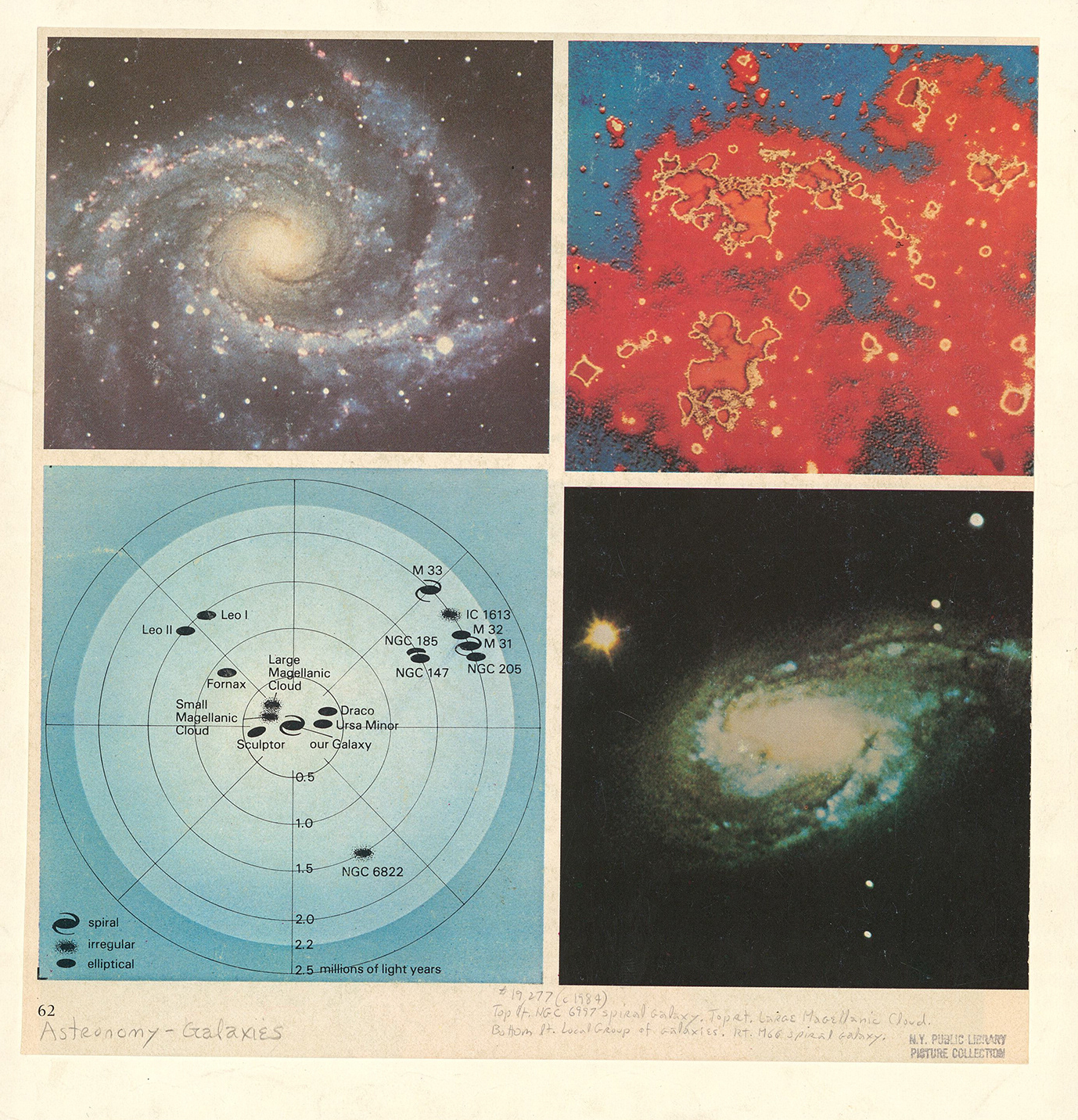
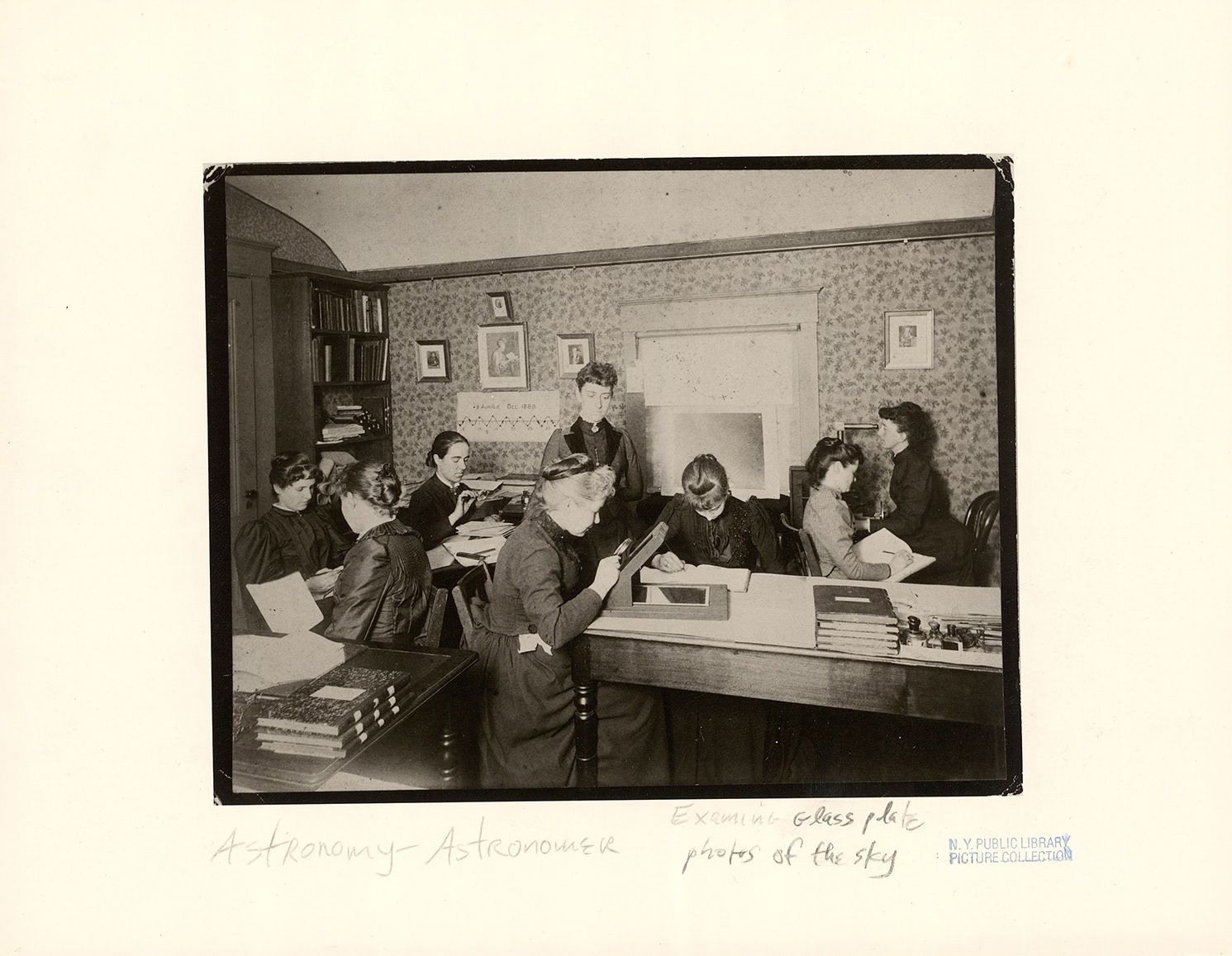
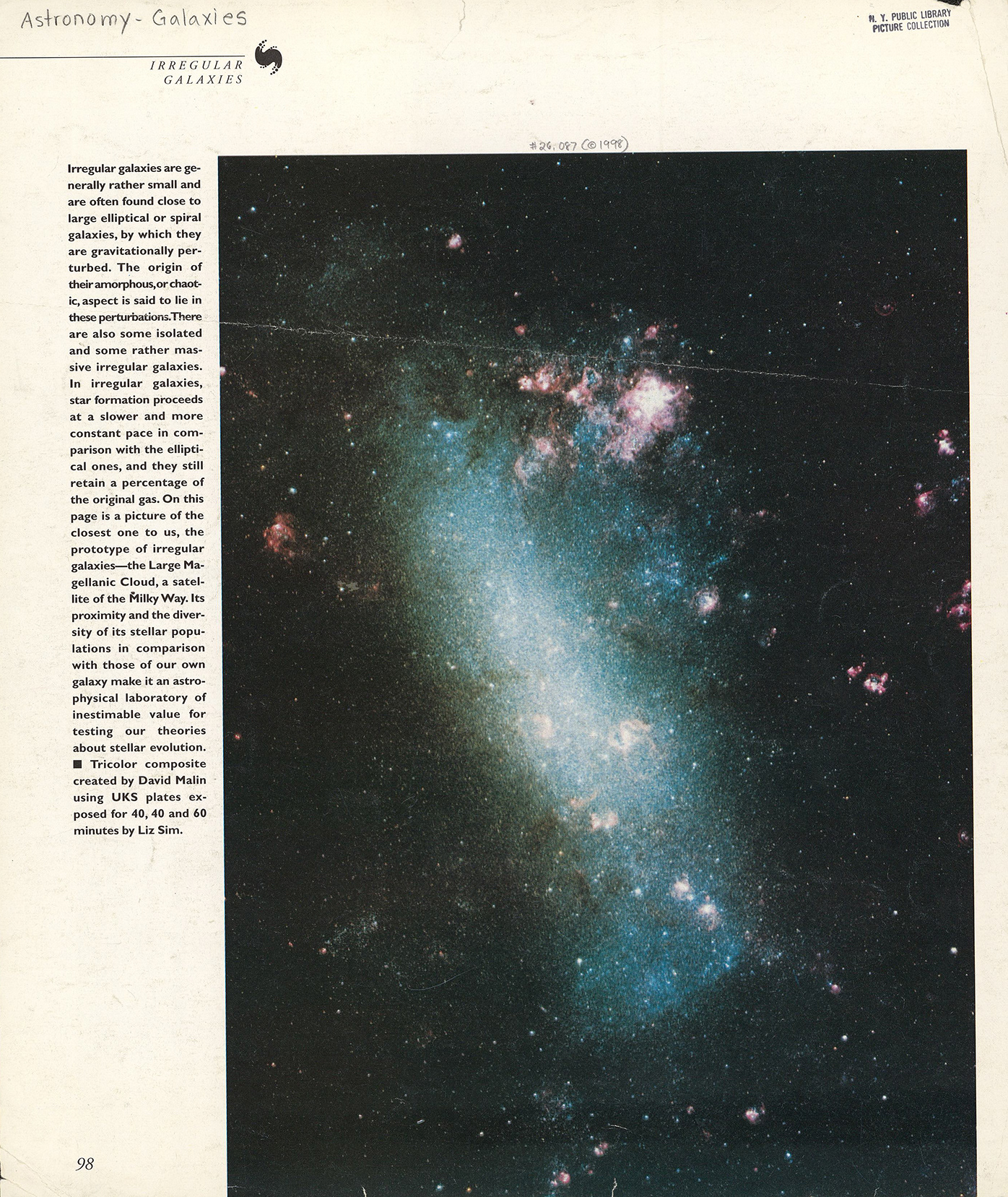
As part of the image research, I scanned materials from the Print Collection at the Stephen A. Schwarzman Building of the New York Public Library. These historical printed materials helped shape the visual direction of the project.
For the astronomical references, I used images from Harvard’s StarGlass archive, a digital collection of glass plate photographs from the Harvard College Observatory. These images helped connect the design to Leavitt’s work with photographic plates and early astronomical observation.
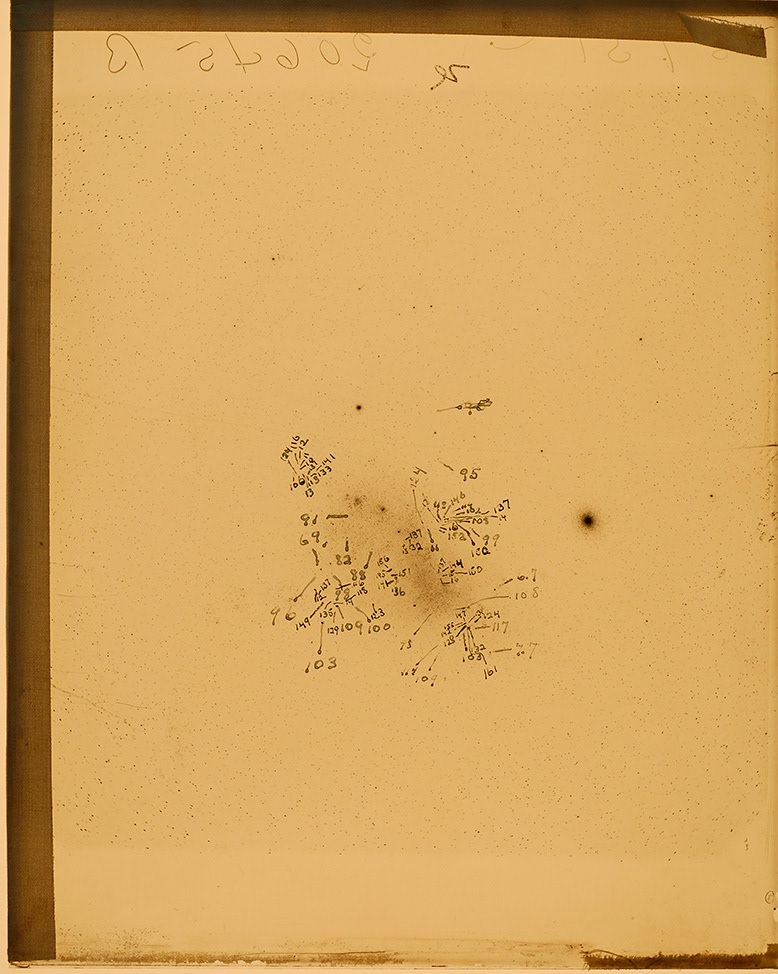
Plate No. B20645, front. Adapted from StarGlass, Center for Astrophysics | Harvard & Smithsonian.
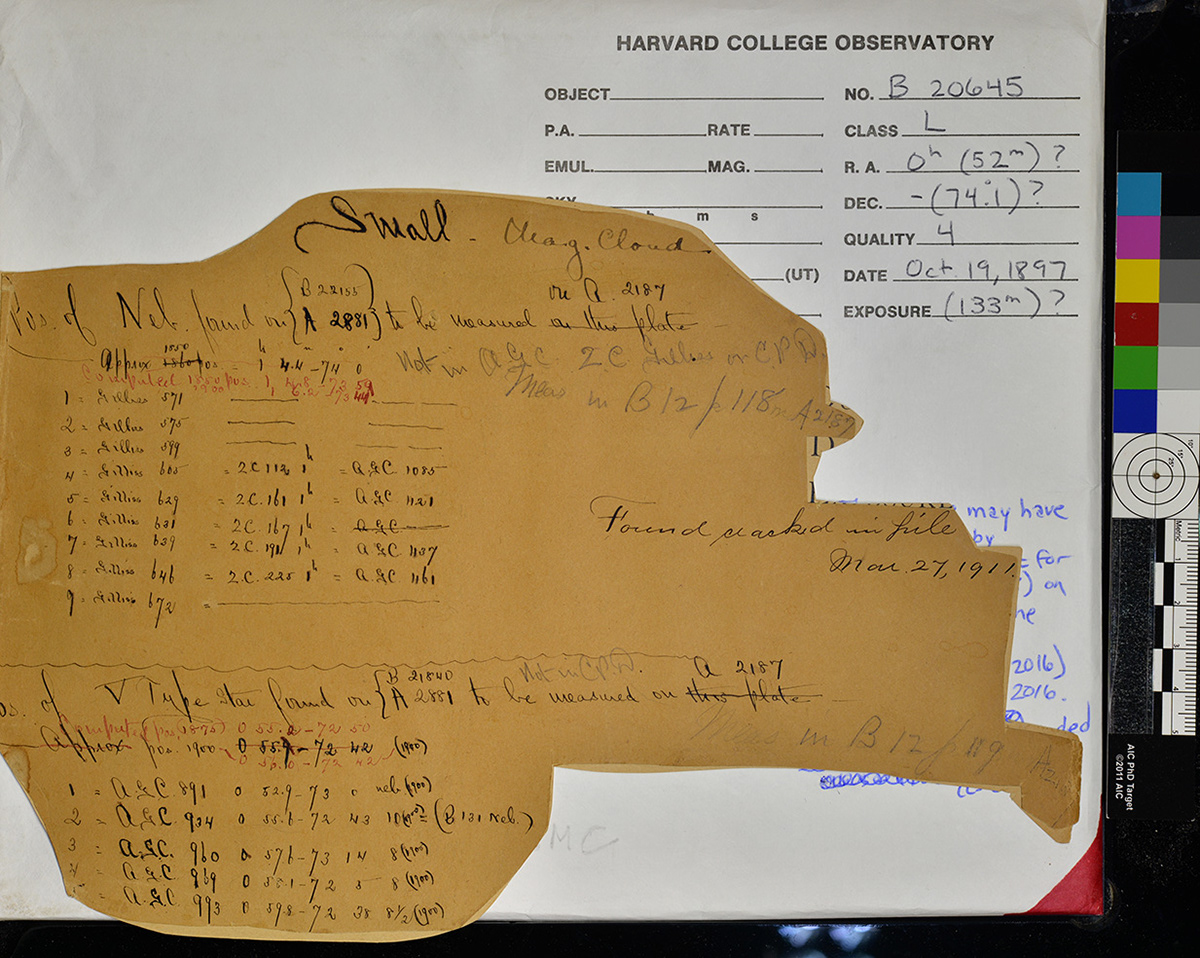
Plate No. B20645, back. Adapted from StarGlass, Center for Astrophysics | Harvard & Smithsonian.
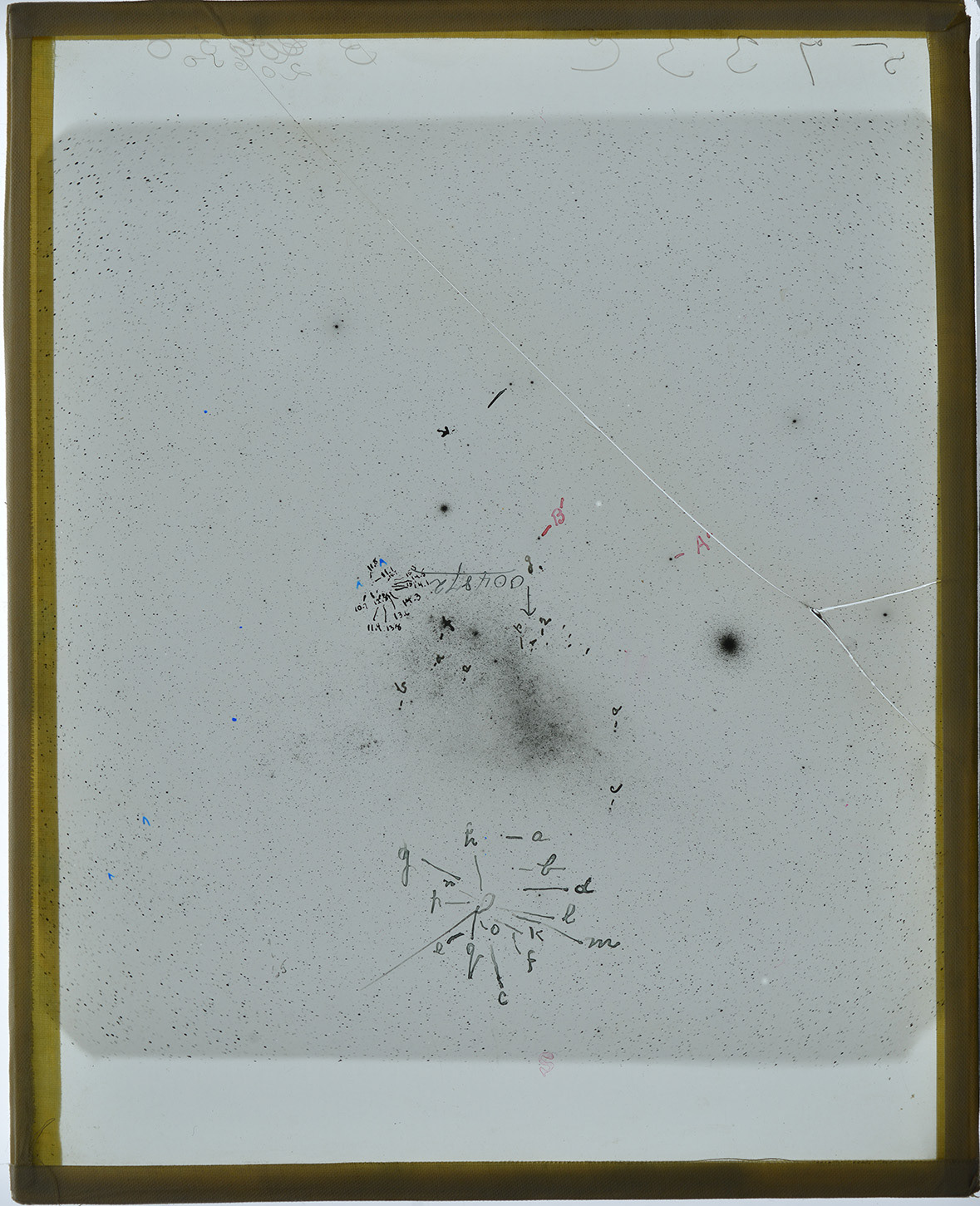
Plate No. B20650, front. Adapted from StarGlass, Center for Astrophysics | Harvard & Smithsonian.
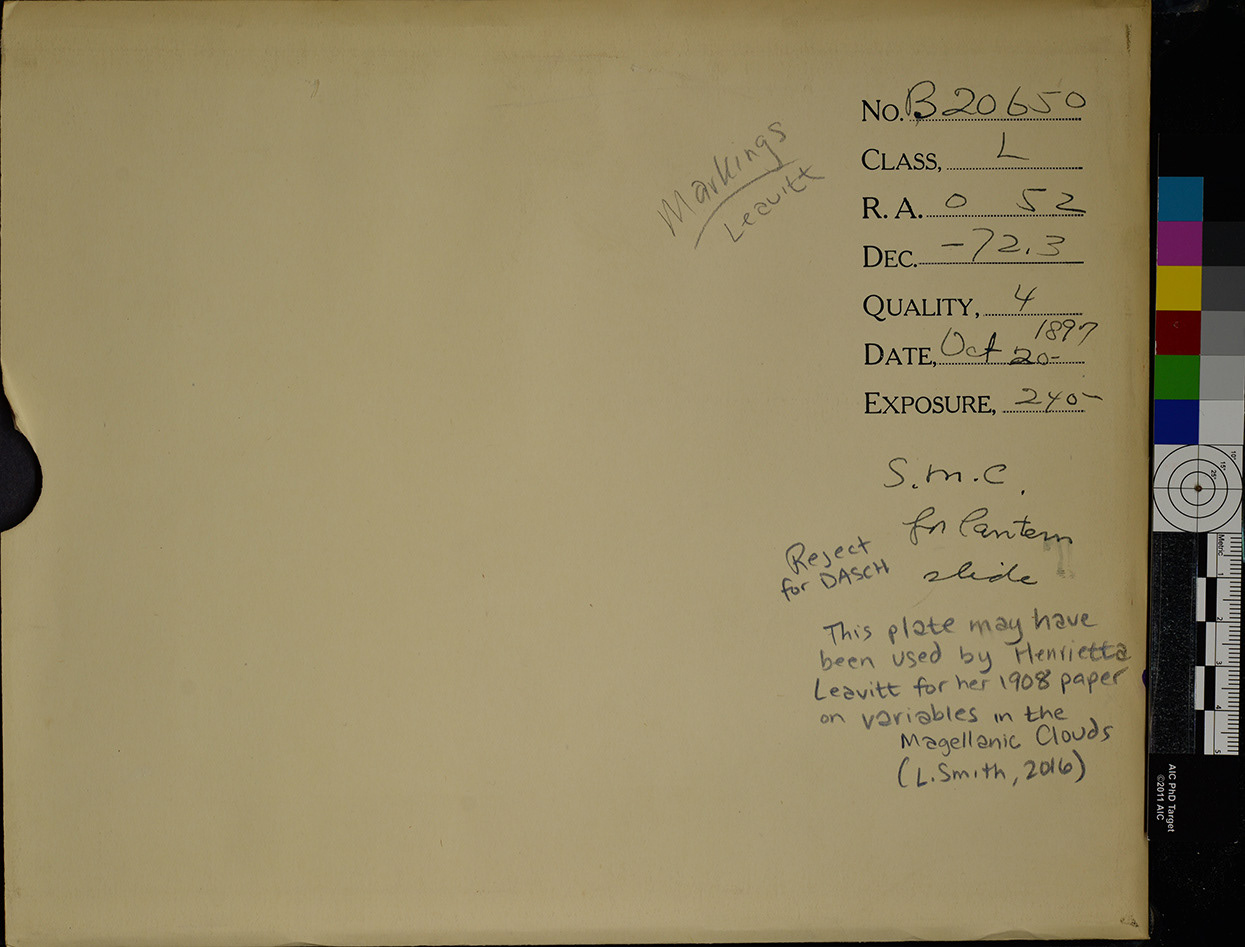
Plate No. B20650, back. Adapted from StarGlass, Center for Astrophysics | Harvard & Smithsonian.
The color palette was kept limited because the galaxy background, other scanned materials, and StarGlass images already bring most of the color into the piece. I used a few muted tones for the text and small accents to keep the design readable without competing with the collage.

Because the composition already has a lot of image texture, I used only IBM Plex Sans Condensed to keep the typography consistent. I created contrast through changes in size, weight, spacing, and placement, so certain words could stand out while keeping the type style cohesive. For the keywords, I also used subtle effects like Outer Glow and Drop Shadow to separate the text from the background without making it look too heavy.

TEXT SOURCES
"Leavitt Discovers a Correlation between Cepheids' Period and Luminosity." A Science Odyssey: People and Discoveries, PBS/WGBH, 1998, https://www.pbs.org/wgbh/aso/databank/entries/dp12le.html.
"Leavitt Discovers a Correlation between Cepheids' Period and Luminosity." A Science Odyssey: People and Discoveries, PBS/WGBH, 1998, https://www.pbs.org/wgbh/aso/databank/entries/dp12le.html.
Smith, Nate. "Henrietta Leavitt, How She Loved the 'Clouds.'" Inside Adams: Science, Technology & Business, Library of Congress, 12 Dec. 2019, https://blogs.loc.gov/inside_adams/2019/12/henriettaleavitt/.
"The Harvard Computers." American Museum of Natural History, 15 Apr. 2015, https://www.amnh.org/explore/news-blogs/harvard-computers-history.
Margolis, Emily A., and Samantha Thompson. "Remembering Astronomer Henrietta Swan Leavitt." Center for Astrophysics | Harvard & Smithsonian, 28 Dec. 2021, https://www.cfa.harvard.edu/news/remembering-astronomer-henrietta-swan-leavitt.
IMAGE SOURCES
"Plate No. B20645." StarGlass, Center for Astrophysics | Harvard & Smithsonian, https://starglass.cfa.harvard.edu/plate/b20645.
"Plate No. B20650." StarGlass, Center for Astrophysics | Harvard & Smithsonian, https://starglass.cfa.harvard.edu/plate/b20650.